
Signs You Need Loose Floor Tile Repair
Most loose floor tiles give you a warning first, so it pays to know the signs. For example, you might hear a drummy sound when you walk across the room. Grout lines may also crack and crumble. Eventually, a tile may even rock or click underfoot.
These signs mean the adhesive under the tile has let go, so only the grout is holding it in place. If you leave it, the problem also spreads to the tiles around it. That is why early loose floor tile repair costs far less than a new floor.
- A hollow sound when you tap or walk on tiles
- Grout that cracks or crumbles, especially in one area
- Tiles that rock or click when you step on them
- Hairline cracks, especially across several tiles in a row
- Tiles that lift along one edge when the weather warms up
Why Floor Tiles Come Loose
Floor tiles rarely come loose for just one reason, so it helps to know the common causes.
Poor adhesive coverage
Some tilers spot-fix tiles or skimp on adhesive, so the tile only bonds in patches. Read our guide to adhesive coverage under AS 3958 too.
Building movement
Houses settle after construction, while slabs also move with the seasons. So without enough movement joints, that stress goes straight into the adhesive.
Temperature changes
Heat makes tiles expand, while cold makes them shrink. Eventually, these small daily shifts weaken the bond, especially near windows and outdoors.
Moisture
Water from leaks, showers or spills can soak through grout when it is not sealed. Then the adhesive underneath softens and loses its grip on the slab.
Timber subfloors
Timber flexes when people walk on it and when humidity changes. So tiles over timber, like many renovated Queenslanders, often come loose first.
Heavy foot traffic
Hallways, kitchens and entries carry the most traffic, so they are usually the first places loose tiles show up.
How Our Loose Floor Tile Repair Works
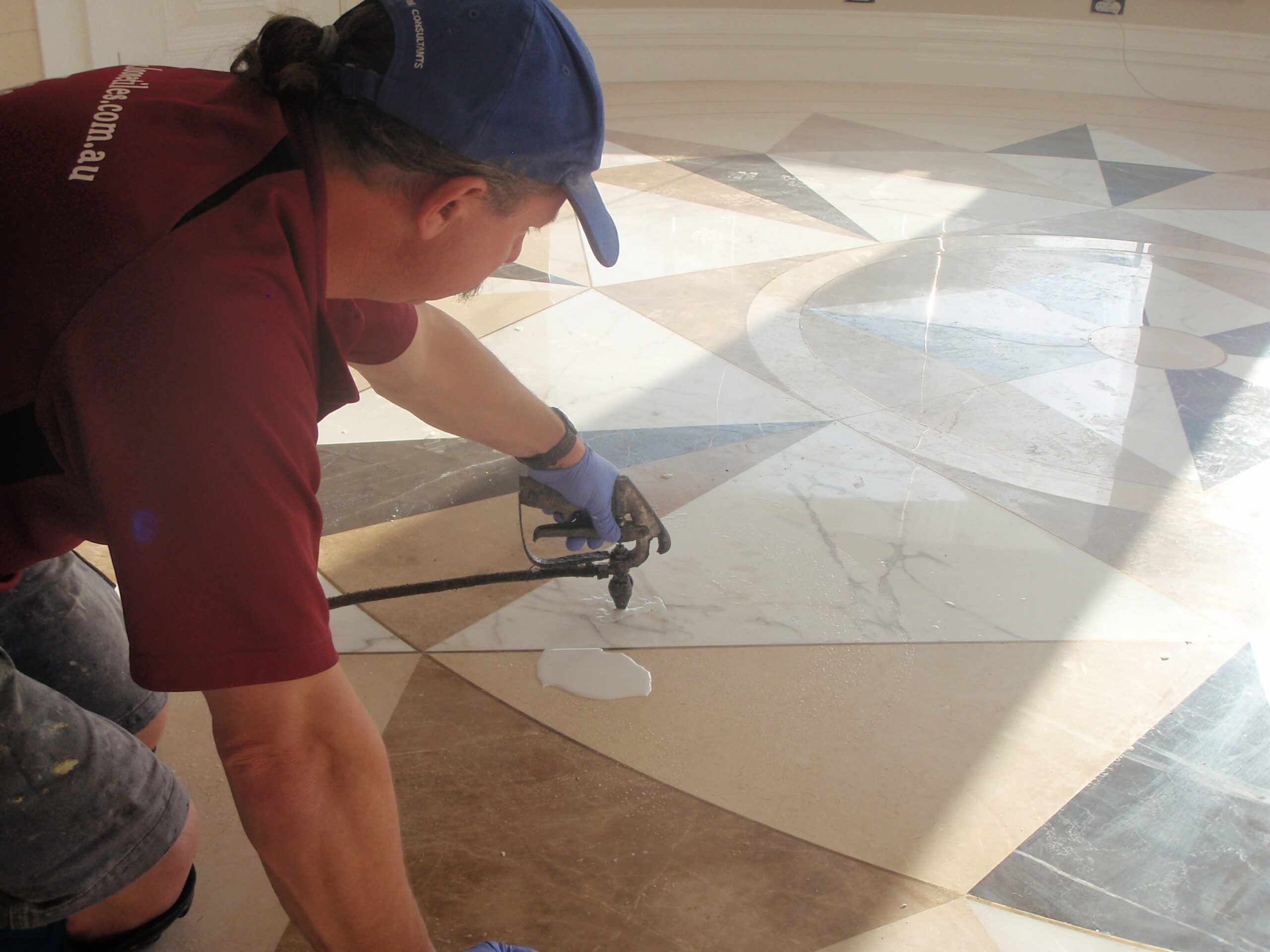
Our Tile Reglue Injection Method fixes tiles where they sit, so there is no demolition, no dust and no skip bin in your driveway.
Inspect and map
Firstly, we tap test the floor to find every loose tile. When needed, we also use thermal imaging to map the repair area.
Inject Injectabond
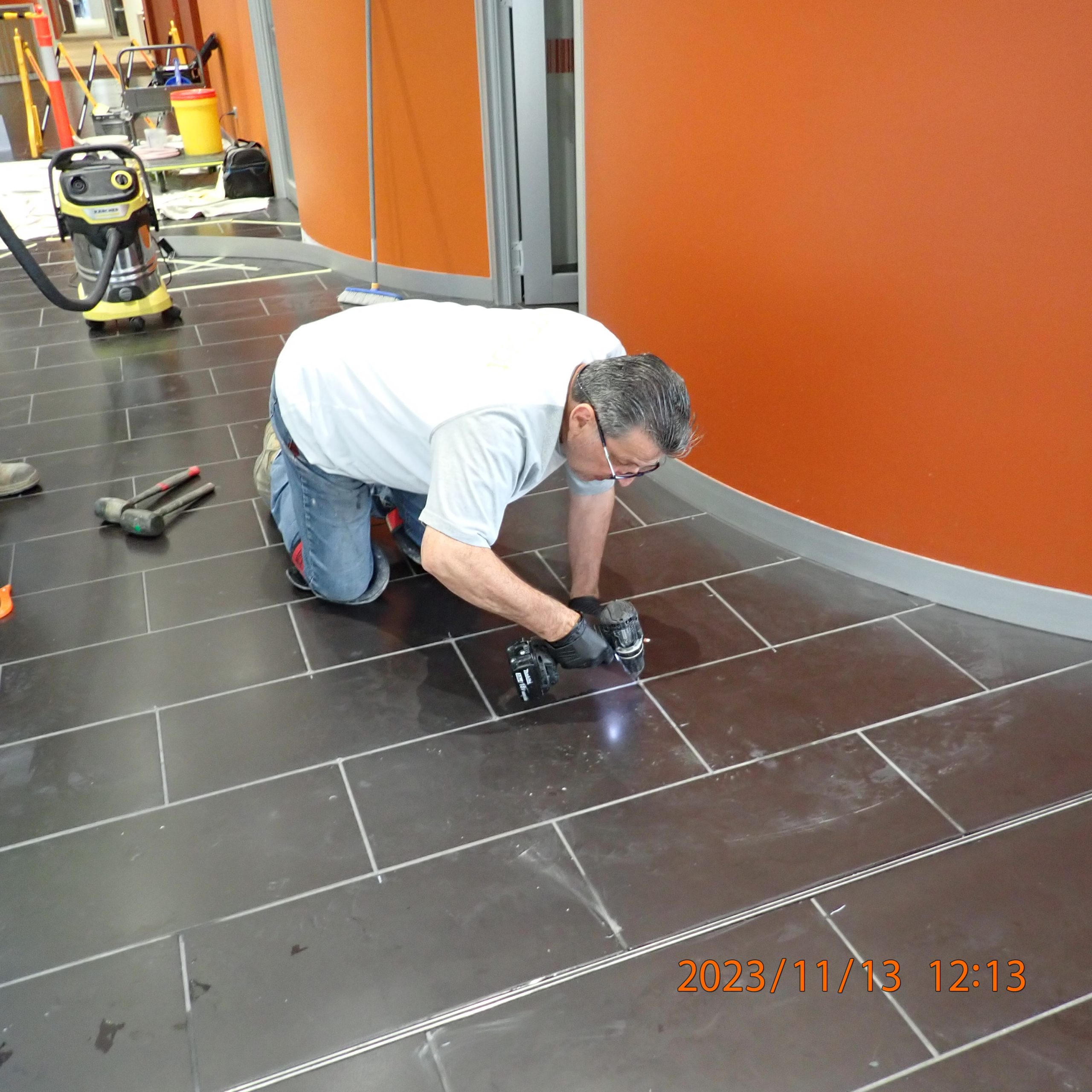
Secondly, we inject Injectabond adhesive through small access points in the grout lines. It then fills the void and bonds each tile back to the slab.
Clean up and walk on
Finally, we fill the access points and clean the area. Generally, your floor is ready for foot traffic within a few hours.
Repair or Replace Your Loose Floor Tiles?
Replacing a whole floor is slow and noisy, and it also costs a lot. Besides, a matching tile is often impossible to find years later. So a handful of loose tiles can quickly turn into a full renovation.
Instead, loose floor tile repair keeps the floor you already have. Because we work through the grout lines, your original tiles stay put and still match. Our method also avoids stressing the sound tiles around the repair.
- Costs far less than full tile replacement
- Floors ready for foot traffic soon after the repair
- Dust free and mess free, so you can stay at home
- Suitable for patios, balconies and pool surrounds too
- Tested to Australian Standards, so you can trust the result
When a tile is broken and no match exists, we can replace it with a feature tile you choose. You can also compare tile repair vs tile replacement in our full guide.
Why Choose TRIM for Loose Floor Tile Repair

Value for Time and Money

Australia-Wide Services
30+ Years of Experience
Guaranteed Repairs
Other Tile Repair Services
Not sure the problem is a loose floor tile? These related services may also help.
 LOOSE WALL TILE REPAIRSShower and bathroom wall tiles fixed in place, so screens and vanities can stay where they are.Learn more →
 DRUMMY TILE REPAIRSDrummy tiles injected and bonded back down before they crack or lift.Learn more →
 HOLLOW TILE REPAIRSFind out what a hollow sound means, then see how we fix it without lifting a tile.Learn more →
 PEAKED & TENTED TILE REPAIRSTented tiles relaid after we release the pressure, so the floor around them stays stable.Learn more →
Loose Floor Tile Repair FAQs
Get in touch with our team today!
Why remove and replace? Inject and save!
T.R.I.M. services are available throughout Australia by fully licensed and insured contractors.