
Signs You Need Loose Wall Tile Repair
Loose wall tiles are easy to miss until one cracks or falls. However, there are usually clear warning signs. For example, tiles may sound hollow when you tap them. Grout lines may also crack in a straight run across the wall.
When you see these signs, the tiles have usually lost their bond with the wall. In wet areas, that gap also lets moisture in. As a result, a small problem can turn into water damage. That is why early loose wall tile repair matters so much.
- A hollow sound when you tap the tiles
- Grout that cracks along a row of tiles, especially in showers
- Tiles that bulge or bow rather than sitting flat
- Movement when you press on a tile
- Cracked tiles around taps and fittings, especially in wet areas
Why Wall Tiles Come Loose
Wall tiles work hard against gravity, water and building movement, so a few common causes are usually behind the problem.
Spot bonding
Many older walls have only a few dabs of adhesive behind each tile, so large air gaps form. Find out how we fix spot bonded wall tiles too.
Moisture in wet areas
Showers soak walls every day, so failed grout or sealant lets water reach the adhesive. Eventually, that water breaks the bond down.
Building movement
Walls move when a house settles and when the seasons change. So without enough movement joints, the tiles take the strain instead.
Mixed wall materials
Because some walls mix sheeting, render and brick, each part moves differently. Tiles over the joins therefore loosen first.
Temperature changes
Hot showers and cold mornings make tiles expand and shrink, so the bond weakens over time.
Poor installation
When a tiler uses the wrong adhesive or rushes the job, weak spots form. Then those spots fail years later, often in a straight line.
How Our Loose Wall Tile Repair Works
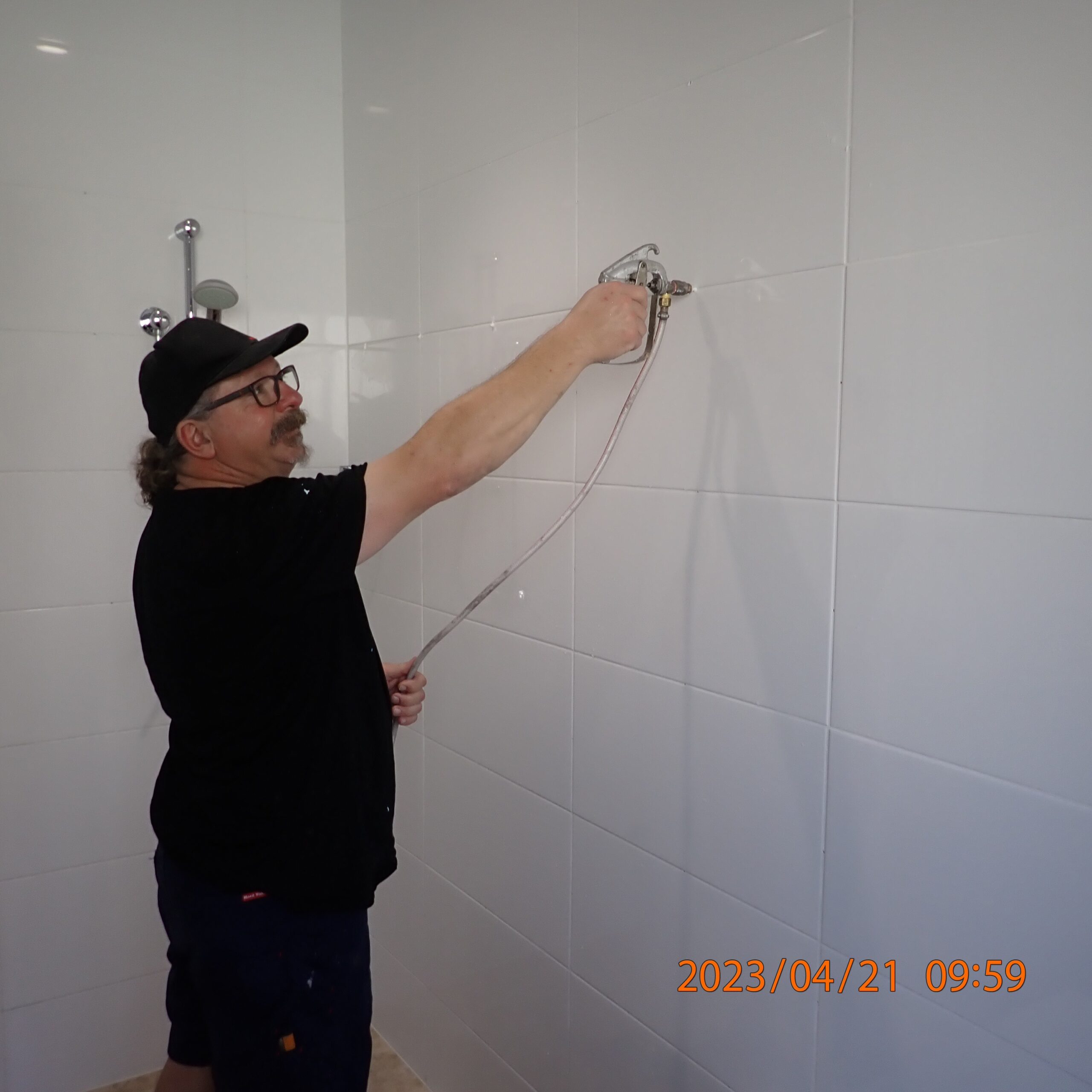
Our Tile Reglue Injection Method works around your fixtures, so there is no need to remove shower screens, vanities, toilets or rails.
Inspect the wall
Firstly, we tap test the tiles to find every loose area. When needed, we also use thermal imaging to map the repair.
Inject behind the tiles
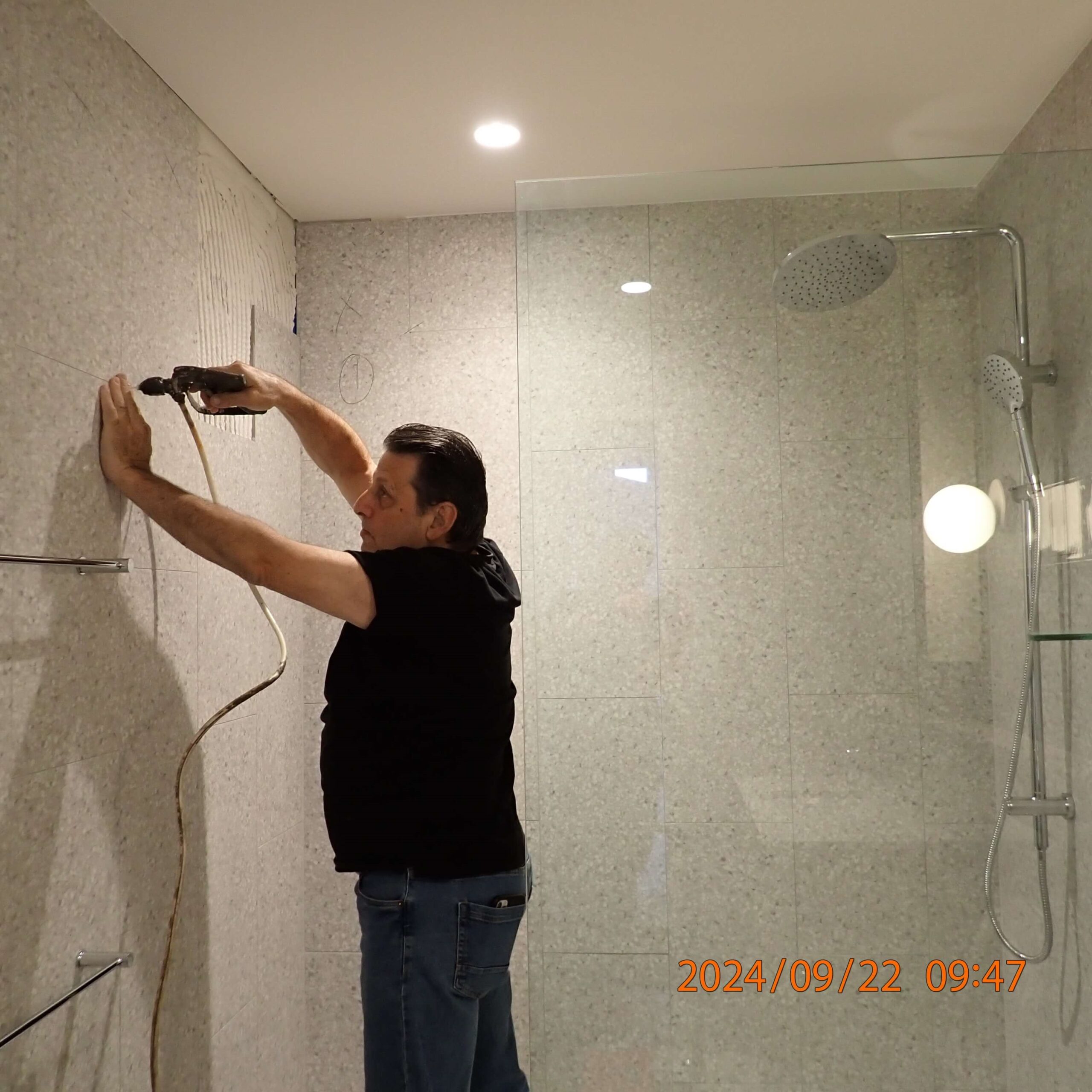
Secondly, we inject flexible Injectabond adhesive through small access points in the grout. It then fills the gaps and bonds the tiles to the wall.
Clean up and use it
Finally, we fill the access points and clean up. Generally, your bathroom is back in use by the next day.
Repair or Replace Loose Wall Tiles?
Replacing bathroom wall tiles usually means demolition and new waterproofing, so it gets expensive fast. Besides, the room is often out of action for two weeks or more. Matching old tiles is also hard, so you may end up retiling the whole wall.
Instead, loose wall tile repair avoids all of that. Because we inject through the grout lines, your fittings and tiles stay where they are. Injectabond also stays flexible, so it handles building movement better than rigid adhesive.
- Costs far less than retiling a bathroom
- Bathrooms back in use soon after the repair
- Screens, vanities and toilets stay in place too
- No dust or mess, so there is nothing to clean up
- Tested to Australian Standards, so you can trust the result
You can also read our guide on how to fix loose wall tiles without removing them.
Why Choose TRIM for Loose Wall Tile Repair

Value for Time and Money

Australia-Wide Services
30+ Years of Experience
Guaranteed Repairs
Other Tile Repair Services
If tiles are also loose on the floor or sound hollow, these related services may help too.
 LOOSE FLOOR TILE REPAIRSFloor tiles that creak or rock, re-bonded so you can walk on them again soon after.Learn more →
 DRUMMY TILE REPAIRSDrummy tiles injected and bonded back down before they crack or lift.Learn more →
 HOLLOW TILE REPAIRSFind out what a hollow sound means, then see how we fix it without lifting a tile.Learn more →
 PEAKED & TENTED TILE REPAIRSTented tiles relaid after we release the pressure, so the floor around them stays stable.Learn more →
Loose Wall Tile Repair FAQs
Get in touch with our team today!
Why remove and replace? Inject and save!
T.R.I.M. services are available throughout Australia by fully licensed and insured contractors.