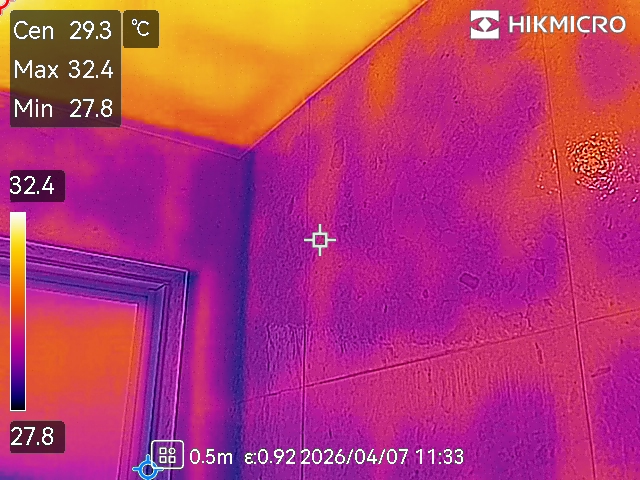
Drummy tiles, hollow-sounding shower walls, and spreading patches of debonded tiles all have one thing in common: the problem is behind the tile, where you cannot see it. Thermal imaging changes that. It lets our technicians map the extent and depth of tile debonding from the outside of the wall, without removing a single tile or disturbing the grout.
How thermal imaging reveals hidden tile defects
A properly bonded tile conducts heat to the substrate evenly. A debonded tile, with an air cavity sitting between the tile and the wall, insulates differently. That thermal difference is invisible to the naked eye, but it shows up clearly on a thermal imaging camera as cooler or warmer patches against the rest of the tiled surface.
On site, our operators combine thermal imaging with two other diagnostic methods:
- Resonance testing. Tapping tiles to identify the characteristic hollow sound of an unsupported cavity. Not every hollow sound means a real problem, and our guide to when hollow-sounding tiles matter explains which ones do.
- Test drilling. Small probes through the grout joints to measure cavity depth directly.
Together, these three methods build a clear, evidence-based picture of where the problem is, how widespread it is, and whether the TRIM rectification service is the right solution.
Why evidence-based inspection matters
Tile defects are often contested. A builder says the installation is fine. An owner says the tiles are loose. A strata committee wants proof before approving expenditure. An insurer needs documented evidence before accepting a claim.
Thermal imaging provides exactly that. The images produced during inspection clearly show how much of each tile is actually bonded to the wall behind it. The Australian standard for tile installation sets a minimum level of adhesive contact coverage, and thermal imaging quantifies the installation against that benchmark.
The same evidence is used to demonstrate compliance after rectification. Post-injection thermal imaging confirms that the cavity behind the tile has been filled and that coverage is back within the standard.
A picture is worth a thousand words
One of the biggest advantages of thermal imaging is that it makes a technical issue easy to see. A side-by-side comparison of pre and post-injection thermal images shows, at a glance, that the problem has been solved. Owners, builders, strata committees, and insurers all appreciate being able to see the result rather than just reading about it. Examples from real inspections are documented across our residential and commercial projects, with client feedback on our testimonials page.
What you get from a TRIM inspection
A TRIM site inspection is more than a quick look over the tiles. You receive:
- A documented thermal imaging assessment of the affected area
- Resonance and test drilling confirmation of any cavities
- A clear scope of works for the rectification required
- Guidance on what the findings mean for wet area compliance
- A written quote for the recommended TRIM solution
The inspection report can be used for insurance claims, strata approval, builder defect discussions, or simply your own records. For a broader look at the methodology we follow, see our How It Works page.
Book a thermal imaging inspection
Thermal imaging takes the guesswork out of tile rectification. If you have drummy tiles, suspected water damage, or a tile defect that needs documenting, our team can inspect the area, report on what we find, and confirm whether Cavity Bridging Injection is right for your situation. We provide inspections in Brisbane, Sydney, Melbourne, the Gold Coast and Northern Rivers, and across Australia. Contact us to book an inspection.