
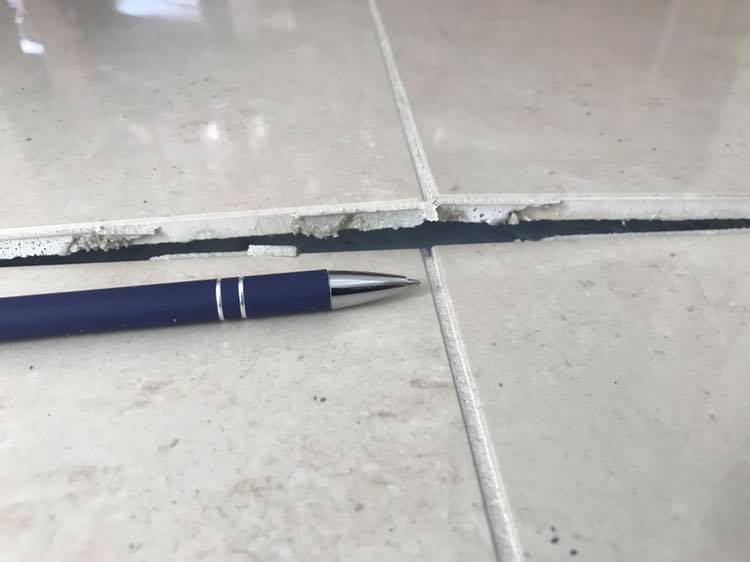
Tap a tiled wall and you will hear something. Most tiles have a slightly drummy sound here and there, especially near edges, corners, or against older substrates. The question most owners ask, rightly, is: how drummy is too drummy? When are hollow-sounding tiles a sign of a serious problem, and when are they just background noise you can safely leave alone?
What hollow-sounding tiles are telling you
A hollow sound is the result of an air cavity behind the tile. Where the adhesive has fully supported the tile, tapping produces a solid, dull sound. Where there is a cavity, the sound is hollow and noticeably different.
Importantly, a hollow sound on its own does not always mean the installation has failed. Small hollow-sounding areas can exist in otherwise sound installations. What matters is whether the tile has enough adhesive coverage behind it to meet the Australian standard, and whether that coverage is evenly distributed. Only a proper inspection can confirm that.
When a hollow sound is not a problem
Not every hollow patch means the installation is defective:
- Small isolated patches. One or two tiles with a slight hollow sound, well away from wet area joints, are often within the normal variation of an otherwise compliant installation.
- Edge effects. Tapping near cut edges or corners can produce a hollow sound without meaningful debonding underneath.
- Older installations on stable substrates. Some settling is normal over years of use.
The real test is how much of each tile is actually bonded to the wall behind it. When that drops below the standard, or when the adhesive under the tile is unevenly spread, the installation is defective. Only an inspection can confirm whether that is the case.
When a hollow sound is a real problem
Hollow sounds become a real concern when they appear:
- Across multiple adjacent tiles. A group of drummy tiles usually indicates a systemic bonding failure rather than a one-off.
- In wet areas. In a shower, bath surround, splashback, or laundry, cavities behind tiles can hold water and breach the compliance requirements for wet areas.
- In spreading patterns. Drumminess that is getting worse over weeks or months means the debonding is progressive.
- With other symptoms. Lifting grout, cracked tiles, visible movement under pressure, or water stains on adjacent surfaces are all indicators of a compliance-grade defect.
- In spot bonded installations. If the tiles were originally installed with adhesive applied in dabs using the wrong adhesive type, the installation is defective regardless of how stable it seems today.
How to know for certain
The only way to know for certain whether hollow-sounding tiles are a real problem is a professional inspection. Our TRIM inspection process combines three diagnostic methods:
- Thermal imaging to map adhesive contact coverage across the tiled surface.
- Resonance testing to identify the characteristic hollow sound and correlate it with thermal imaging findings.
- Test drilling through the grout joints to confirm cavity depth.
Together, these give you a quantified picture of the installation, rather than a guess based on how it sounds from the outside. The full inspection methodology is on our How It Works page.
What happens if rectification is needed
If the inspection shows the adhesive contact behind the tiles has fallen below the standard, the tiles are defective and, in wet areas, likely in breach of the National Construction Code. Cavity Bridging Injection is the TRIM rectification service developed for exactly this situation. Injectabond adhesive is pressure injected through the existing grout joints to fill the cavity and bring coverage back within the standard, without removing any tiles. Examples are documented on our projects page, with client feedback on our testimonials page.
The simple rule of thumb
If you have a single isolated drummy tile outside a wet area, it is probably fine. If you have drummy tiles in a shower, a spreading area of hollow-sounding tiles, tiles that are moving or lifting, or tiles you know were spot bonded, it is worth booking an inspection. The cost of a professional assessment is small compared to the cost of a progressive failure left untreated.
We work across Brisbane, Sydney, Melbourne, the Gold Coast, and other areas across Australia. Contact us to arrange an inspection.