
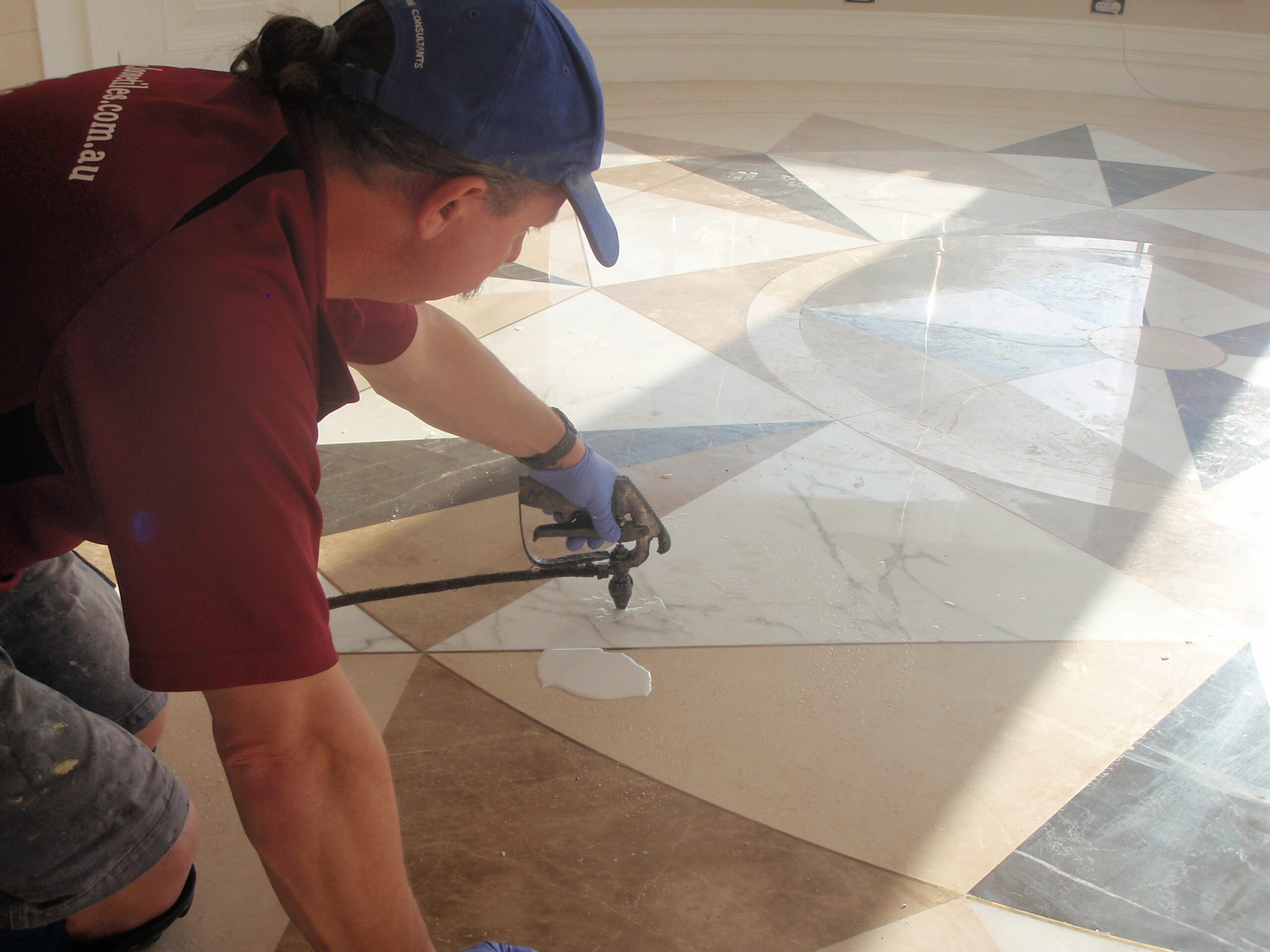
Handover is the part of a build where tile defects tend to surface. A walkthrough reveals drummy tiles in the ensuite. A final inspection picks up hollow patches behind the shower. An owner notices lifting around the vanity. Suddenly the handover is on hold, the client is asking hard questions about workmanship, and you are weighing up whether to argue the point or strip and retile the wet area at your cost. Cavity Bridging Injection is often the better option for both outcomes.
The common defects builders see at handover
Most handover tile defects fall into a few recognisable categories:
- Spot bonded tiles. Adhesive applied in dabs rather than a full bed, leaving cavities behind tiles. Considered defective when the wrong adhesive is used.
- Poor contact coverage. Less than 90% adhesive contact between tile and substrate. This is the most common defect picked up in inspections.
- Uneven distribution. Adhesive concentrated in the middle of tiles with dry edges. The edges are where stress and water affect tiles the most.
- Debonded wall tiles. Progressive failure where tiles have lost adhesive contact since installation, often in wet areas.
Each of these defects breaches the compliance requirements for wet areas and puts the waterproofing system behind the tiles at risk.
Why stripping is usually not the right answer
The first instinct with tile defects is often to strip and retile. It feels like the cleanest outcome. In practice, it rarely is:
- You lose the waterproof membrane. It needs to be reinstalled, inspected, and recertified.
- Tile matching becomes a problem. Batches run out, ranges are discontinued, and the owner often notices the difference.
- The timeline blows out. Demolition, drying, membrane, tiling, grouting, and curing add weeks to handover.
- Costs escalate. Labour, materials, make-good, and consequential delays add up quickly.
- Other trades are disturbed. Plumbing, shower screens, and vanities often need to be removed and reinstalled.
On top of that, stripping only makes sense if the defect is so widespread that spot rectification cannot restore compliance. That is rarely the case.
Cavity Bridging Injection as a builder’s tool
The Tile Reglue Injection Method, delivered as our rectification service, was developed for exactly this situation. Injectabond adhesive is pressure injected through the existing grout joints into the cavity behind each debonded tile. The cavity is filled, adhesive contact coverage is restored to the level the standard requires, and the installation is brought back into compliance.
For a builder, that means:
- No demolition. The waterproof membrane stays intact and certified.
- No tile matching. The original tiles stay on the wall.
- Fast turnaround. Most handover-scale rectifications are completed in a day or two.
- Documented outcome. Thermal imaging before and after confirms compliance, which you can pass on to the client, the certifier, or an insurer.
- Backed by warranties. 10 year workmanship warranty and 10 year Injectabond product warranty, supporting your own defect liability position.
Compliance you can hand over
Rectification through Cavity Bridging Injection brings the installation back within the requirements of the Australian tile installation standard and the National Construction Code. It also keeps adhesive manufacturer installation requirements intact, so product warranties remain valid.
The inspection report and post-injection thermal imaging give you an evidence trail you can rely on, whether you are closing out a defect list, defending a practical completion date, or dealing with an insurance or warranty claim after handover. The full methodology is explained on our How It Works page, with examples on our projects page and feedback from past clients on our testimonials page.
How to engage TRIM on a build
Our team has worked alongside builders, rectification contractors, strata managers, and major insurers on domestic and commercial projects across Australia for 30 years. We can inspect a single bathroom or map defects across an entire building, provide a compliant rectification scope, and deliver the works in coordination with your program.
We work across Brisbane and South-East Queensland, Sydney, Melbourne, the Gold Coast and Northern Rivers, Mackay, Townsville, Tasmania, and other areas across Australia.
If you have a handover-blocking tile defect or a defects liability period issue, contact us to arrange an inspection. The earlier we are involved, the cleaner the outcome.